


Business Cards
What to Include on Your Business Card
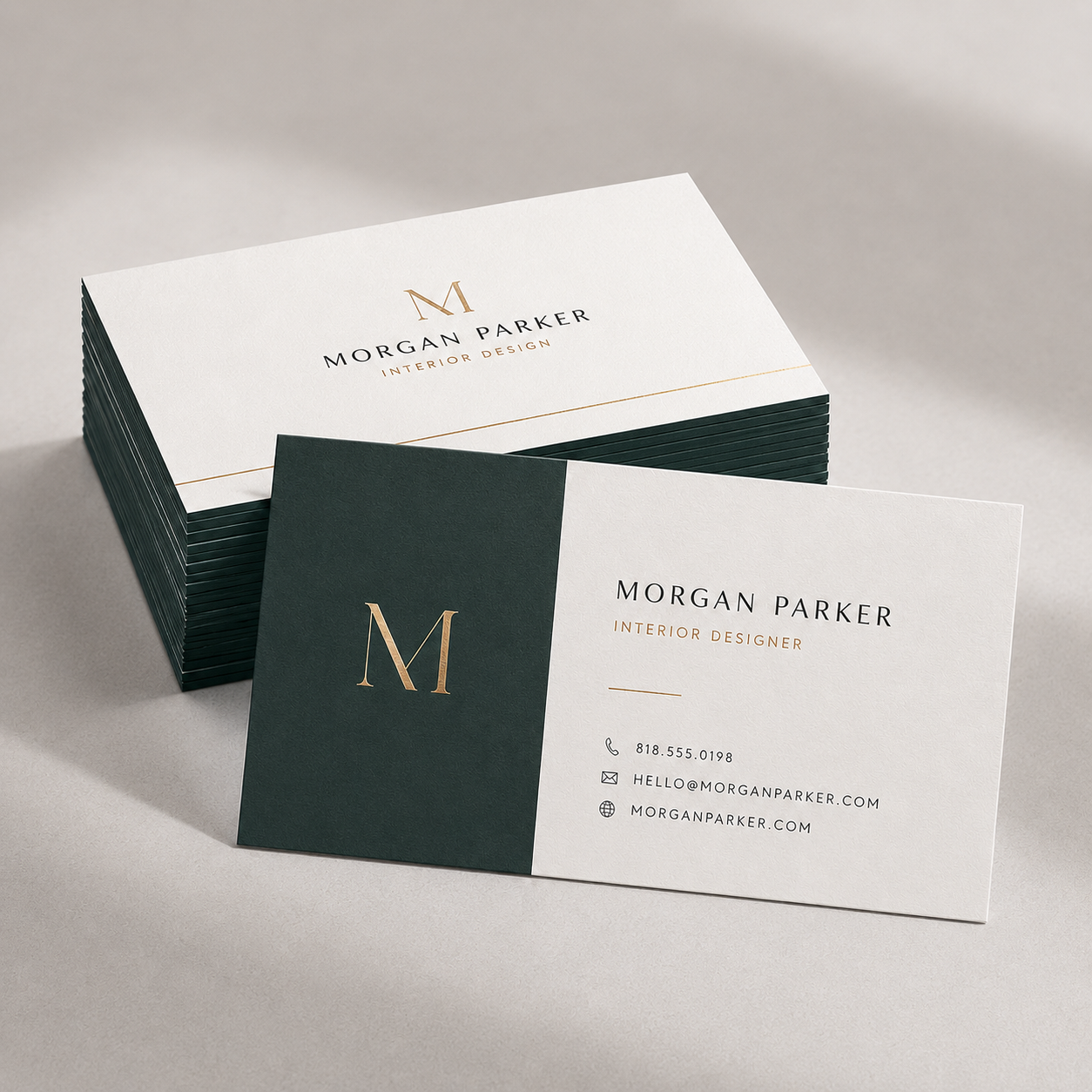
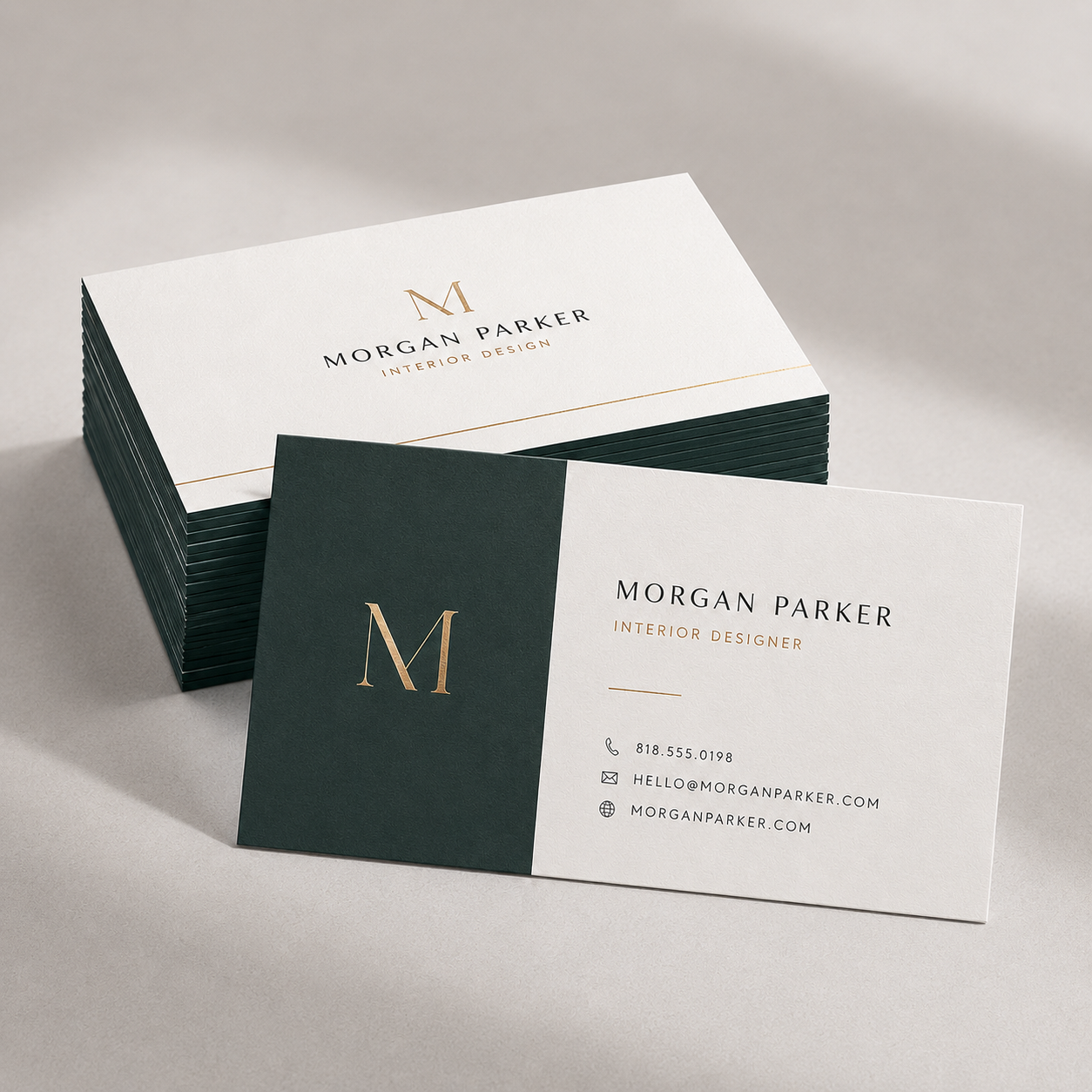
Keep it simple — you don't need to cram everything on there. Stick to the essentials:
- Your name — make it the most prominent text
- Title or role — so people remember how you can help them
- Phone and email — pick the contact methods you actually check
- Website or social handle — if it's relevant to your work
- Company name and logo — for brand recognition
Design Tips That Make a Difference
- Less is more: A clean layout makes your info easy to find at a glance
- Stay on brand: Use colors and fonts that match your other materials
- Think about finish: Glossy feels polished and vibrant; matte feels modern and sophisticated; linen adds texture and warmth
- Consider the weight: Thicker cardstock (16pt) feels more premium in hand
- Add a unique touch: Foiling, soft touch, rounded corners, or a QR code can help you stand out
Why Business Cards Still Matter
In a world of LinkedIn requests and digital contacts, there's something memorable about handing someone a physical card. It's a small thing that signals professionalism, and it gives people something tangible to hold onto after you've met. A well-designed card can spark a conversation — and stick around long after the networking event ends.
Ready to create your product design?
To start, select the product size, preview the design guidelines, download the guidelines for reference, and proceed with the customization options.
To start, select the product size, preview the design guidelines, download the guidelines for reference, and proceed with the customization options.
Bleed Line
Safe Line